


Missional Spirituality
Does my time with God pull me away from my neighbors, or propel me into them?
How do I balance my busy calendar between spending time with God in devotional prayer and doing outward ministry in my community?
Invest in intimacy with Jesus, walk with him, and experience more of his kingdom fruitfulness and joy as we partner with him on mission in this world.
Overview
The Inseparable Rhythm of Intimacy and Sentness
For far too long, the church has labored under a destructive, manufactured divide between the contemplative life and the missional life. On one side stand those who cherish silence, solitude, spiritual direction, and interior communion with God—often retreating into monastic seclusion or cloistered devotionalism while remaining largely disconnected from the cries, heartaches, and systemic injustices of their surrounding neighborhoods. On the other side stand passionate church planters, social activists, and kingdom catalysts who exhaust themselves in ceaseless outward activity, feverishly organizing community programs and evangelistic initiatives, only to end up dry, hollowed-out, and cynical because their exterior labor has outpaced their interior life with God.
In our published work, The Art of Missional Spirituality: 31 Sacred Practices for Jesus-Followers (100 Movements Publishing, 2023), we offer a direct refusal of this false choice. We contend that there is no true Christian mission without deep intimacy with the Father—and there is no authentic intimacy with the Father that does not compel us to follow Him out the front door into the mission of His kingdom.
When Jesus invites His disciples in Matthew 4:19, He says, "Follow me, and I will make you fishers of men." Intimacy (following Jesus) and sentness (becoming fishers of men) are given in a single breath. They are not two sequential phases of the Christian life where one must spend decades becoming "spiritually mature" before daring to step across the street to meet a neighbor. Rather, they form a single, energizing rhythm of life: we breathe in the grace, affection, and presence of God, and we breathe out neighborly kindness, hospitable tables, and tangible kingdom witness.
The Integrating Image: Pando
Throughout our writings and leadership with The Pando Collective, the ancient aspen grove in Utah—known as Pando—serves as our foundational metaphor. To an untrained observer standing in the forest, Pando appears to be thousands of separate, distinct trees. Yet botanists tell us that beneath the soil, Pando is actually a single living organism: one massive, ancient root system that continuously sends up new trunks.
In missional spirituality, the subterranean root system is our shared, hidden life in Christ—nurtured through silence, centering prayer, scripture soaking, and unhurried communion. The trunks above ground represent the manifold outward expressions of neighborly love, parish renewal, and cultural blessing. Sever the trunks from the root system, and the forest withers into dry timber; bury the root system and suppress new shoots, and life never breaks into the light. True missional spirituality holds root and shoot in holy, perpetual communion.
Dual Credibility Across Traditions
Because missional spirituality unites interior contemplation with outward apostolic sentness, it has resonated deeply across previously divided streams of the wider Church. Our work carries the rare dual endorsement of leaders from Renovaré—the contemplative formation community founded by Richard Foster (including Ted Harro, Carolyn Arends, and Mimi Dixon)—and leaders from Forge America and the 100 Movements Network (including Alan & Debra Hirsch, Rowland Smith, Terry Ishee, and JR Woodward). This dual lineage affirms what the earliest church understood: when everyday believers pray deeply, they love their neighbors boldly.
The usual question:
How do I balance my busy calendar between spending time with God in devotional prayer and doing outward ministry in my community?
The better question:
Does my time with God pull me away from my neighbors, or propel me into them?
The 31 Sacred Practices & Foster’s Six Streams
The 31 Sacred Practices represent the primary practical architecture of The Art of Missional Spirituality. Drawn from over two hundred historical and contemplative traditions and field-tested with over one hundred practitioners across multiple years (originally published as 31 Days of Delight through the V3 Movement in 2020), these practices are organized across three rhythmic dimensions of life:
Inward Communion
Upward Worship
Outward Sentness
The Biblical Mandate
From Richmond to Denver: Two Decades of Field Testing
The insights of The Art of Missional Spirituality were not formulated in an academic ivory tower; they were forged through two decades of hands-on church planting, network leadership, and urban neighborhood ministry.
In 2013, Jeremy and Monica founded the Arise RVA Church Network in Richmond, Virginia. Rather than building a traditional centralized church, they planted decentralized microchurches in urban neighborhoods across the city. They quickly discovered that church planters who lacked deep interior roots in contemplative prayer burned out rapidly in the intense social pressures of the city. To sustain their leaders, they began distilling historical practices from across church history—from Celtic monastics and the Desert Fathers to modern spiritual directors.
In 2019, Jeremy and Monica relocated to Denver, Colorado, to help launch the Front Range expressions of The Pando Collective and support church planting movements with Forge America. In 2020, through the V3 Church Planting Movement, they published 31 Days of Delight, which was tested by more than one hundred practitioners across thirty-five countries. This multi-year journey culminated in the publication of The Art of Missional Spirituality with 100 Movements Publishing in 2023.
Historical Context & Movement Lineage
From Richmond to Denver: Two Decades of Field Testing
The insights of The Art of Missional Spirituality were not formulated in an academic ivory tower; they were forged through two decades of hands-on church planting, network leadership, and urban neighborhood ministry.
In 2013, Jeremy and Monica founded the Arise RVA Church Network in Richmond, Virginia. Rather than building a traditional centralized church, they planted decentralized microchurches in urban neighborhoods across the city. They quickly discovered that church planters who lacked deep interior roots in contemplative prayer burned out rapidly in the intense social pressures of the city. To sustain their leaders, they began distilling historical practices from across church history—from Celtic monastics and the Desert Fathers to modern spiritual directors.
In 2019, Jeremy and Monica relocated to Denver, Colorado, to help launch the Front Range expressions of The Pando Collective and support church planting movements with Forge America. In 2020, through the V3 Church Planting Movement, they published 31 Days of Delight, which was tested by more than one hundred practitioners across thirty-five countries. This multi-year journey culminated in the publication of The Art of Missional Spirituality with 100 Movements Publishing in 2023.
Stories from practice
The Front Porch Table in Richmond’s East End
2015–2017 — The Front Porch Table in Richmond’s East End
A planting couple replaced program flyers with daily Centering Prayer and porch presence, resulting in an organic microchurch formed around their kitchen table.
Pathway connection: Demonstrates how shifting from aggressive program outreach to interior Centering Prayer and front-porch hospitality unlocks neighborhood trust.
The Denver Health Care Workers’ Welcoming Prayer Circle
2020–2021 — The Denver Health Care Workers’ Welcoming Prayer Circle
An ER nurse used contemplative practices to anchor herself in God’s love, creating a pre-shift prayer huddle that sustained hospital staff during crisis.
Pathway connection: Demonstrates how the Welcoming Prayer and breath prayer sustain frontline workers through severe compassion fatigue.
The 31 Sacred Practices Immersion
Resources for the journey
Articles for this theme
book(link)
The Art of Missional Spirituality: 31 Sacred Practices for Jesus-Followers
By Jeremy & Monica Chambers (100 Movements Publishing, 2023). The flagship text exploring the inseparable rhythm of intimacy and sentness with 31 field-tested practices.
book(link)
Streams of Living Water: Celebrating the Great Traditions of Christian Faith
By Richard Foster (HarperOne). The foundational text detailing the Six Streams of Christian spiritual vitality that serve as our diagnostic layer.
book(link)
The Forgotten Ways: Reactivating the Missional Church
By Alan Hirsch (Brazos Press). The groundbreaking exploration of apostolic movement DNA and incarnational presence.
podcast(link)
Shifting Culture Podcast — Ep. 197: Missional Spirituality with Jeremy & Monica Chambers
An in-depth conversation exploring how contemplative intimacy sustains decentralized church planters through cultural shifting.
The Contemplative-Missional Mentor
The AI Lab mentor for Missional Spirituality is tuned to help you hold interior communion and outward neighborhood sentness together as a single rhythm of life. Rather than giving you sterile, programmatic advice or encouraging religious hustle, this mentor invites you to pause, examine your heart before the Father, and discern how the 31 Sacred Practices can take root in your specific neighborhood. Bring it your real neighborhood tensions, your calendar exhaustion, and your longing for deeper intimacy with Jesus.
- Try: “Help me craft a weekly rhythm that integrates Centering Prayer with hosting my neighbors for dinner.”
- Try: “I feel guilty when I spend time in quiet contemplation instead of doing ministry tasks. How can I reframe this?”
- Try: “Walk me through practicing the Welcoming Prayer before an upcoming difficult neighborhood association meeting.”
- Try: “How can our microchurch use Foster’s Six Streams to diagnose why our gatherings feel spiritually dry?”
Questions people ask
Distortions Named in Our Own Voice
When we fail to hold missional spirituality together in holy balance, church communities inevitably drift into harmful counterfeits and theological distortions that sap our interior joy and neutralize our outward witness in our neighborhoods.
Formation-Then-Mission Sequencing
Contemplation as an Advanced Tier
Calendar Competition
Pathway vocabulary
- Missional Spirituality
- The continuous, inseparable rhythm of deepening intimacy with the Triune God while simultaneously engaging in outward neighborhood mission, rejecting all separation between contemplation and action.
- Pando
- The ancient aspen colony in Utah sharing a single subterranean root system across thousands of trees; our primary integrating metaphor for one root in Christ nourishing diverse contextual expressions.
- The 31 Sacred Practices
- An audit-ready collection of spiritual habits organized into Inward Communion, Upward Worship, and Outward Sentness, tested across hundreds of practitioners to cultivate everyday missional formation.
- Welcoming Prayer
- A contemplative consent practice created by Mary Mrozowski and adapted for missional practitioners to welcome God into feelings of vulnerability and release demands for security, affection, and control.
About Jeremy & Monica Chambers
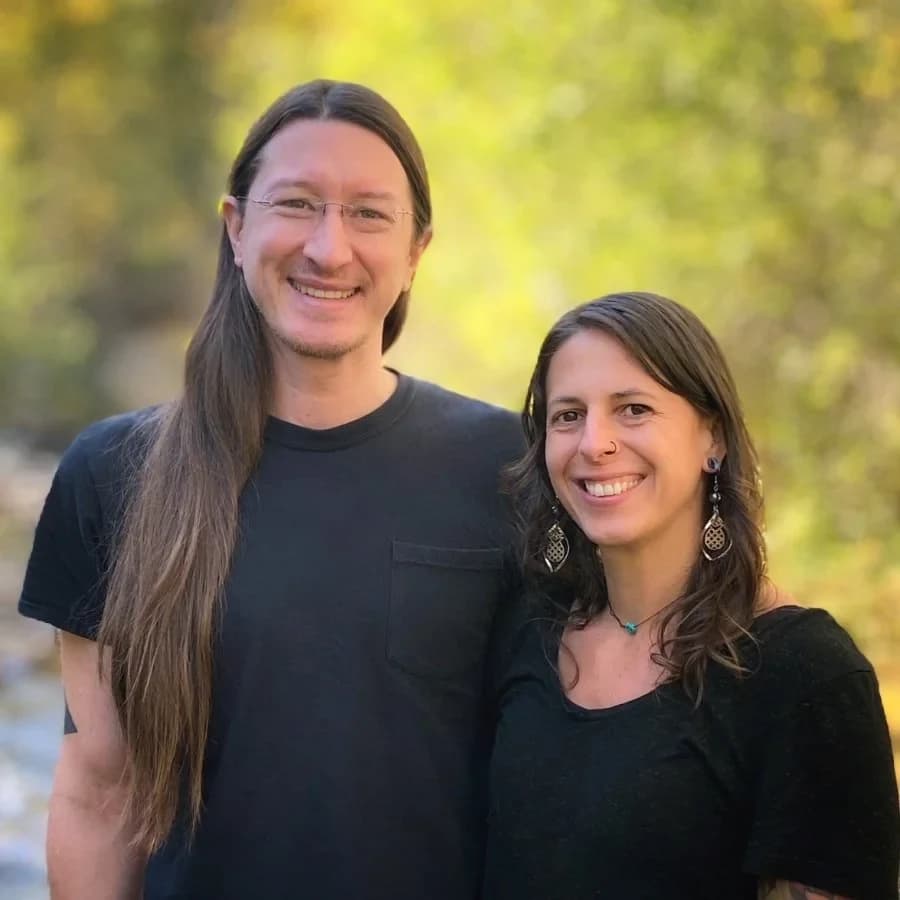
Jeremy "Jemo" Chambers is an American church planter, urban missionary, spiritual director, author, and trainer whose vocational life sits at the seam between contemplative spiritual formation and missional-movement practice. Born around 1986, he has said he began praying about a
Missional Spirituality