


Sustainable Mission
Am I working for God, or with God?
What time management systems, organizational tools, and self-care retreats can prevent me from burning out in ministry?
The line between God's work and ours will disappear as we enter deeper intimacy with the Father.
Overview
Moving from Striving for God to Walking With God
Burnout in kingdom ministry is not an accident or an unavoidable occupational hazard; it is the predictable consequence of an upside-down theology. When Christian leaders, church planters, and ordinary disciples attempt to engage in mission relying primarily on their own willpower, grit, and strategic organizational cleverness, exhaustion is only a matter of time. We operate as if God were an absentee landlord who has commissioned us to fix His broken world on His behalf while He watches anxiously from the bleachers.
Throughout our teaching in Kingdom Contours, The Art of Missional Spirituality, and across national coaching environments like the Shifting Culture Podcast (Episode 197), we anchor our understanding of sustainability in Jesus' declaration in John 5:19: "Very truly I tell you, the Son can do nothing by himself; he can do only what he sees his Father doing, because whatever the Father does the Son also does." If Jesus Christ—the incarnate Lord of glory—refused to initiate self-reliant, unilateral ministry, how could we possibly think we can run ahead of the Father and sustain ourselves?
Sustainable mission is not about installing superficial "self-care hacks" onto an overburdened lifestyle—taking a fifteen-minute walk or treating ourselves to a weekend spa day so that we can jump right back on the hamster wheel of performance. Genuine sustainability is a structural, theological reorientation: it is shifting our fundamental operating posture from working for God to walking with God. As author Skye Jethani captures so beautifully in his writing on the "With God" life: as we enter deeper intimacy with the Father, the anxious line between God's work and ours begins to disappear.
The Original Hinge: Calling Versus Assignment
At the very core of our framework for sustainable mission is a diagnostic hinge we have cultivated over twenty years of pioneering church networks: the radical distinction between Calling and Assignment.
- Calling is what God has placed upon your very life. It is your permanent identity as His Beloved, your lifelong vocation as an ambassador of His kingdom, and your abiding character formed into the likeness of Christ. Calling does not expire when a job title changes, when a church plant closes, or when a season of parenting shifts.
- Assignment, by contrast, is the temporary, contextual vehicle God gives you to express your calling in a specific time, place, and season. Planting a specific microchurch in Richmond, directing a regional network, hosting a Tuesday evening neighborhood meal, or mentoring a particular cohort are all assignments.
Most ministerial heartache, emotional devastation, and spiritual burnout happen when leaders conflate these two realities. When an assignment becomes your calling, its struggles feel like existential threats to your soul, and when an assignment comes to a natural, God-ordained end, leaders experience a catastrophic loss of identity. By keeping calling rooted in Christ's unchanging love and holding assignments with open, relaxed hands, we are liberated to labor with enduring joy.
The usual question:
What time management systems, organizational tools, and self-care retreats can prevent me from burning out in ministry?
The better question:
Am I working for God, or with God?
The Cycle of Grace & The Calling vs. Assignment Hinge
The Cycle of Grace
Calling vs. Assignment Hinge
The Biblical Mandate
The Crucible of Burnout and the Forge America Cohorts
The framework of Sustainable Mission was born out of Jeremy and Monica's own personal encounter with ministerial exhaustion during the early years of planting in Richmond. Like many young, zealous planters, they believed that loving God meant working eighty hours a week, saying yes to every emergency, and carrying the emotional weight of their community without boundaries.
Their transformation began when they encountered the contemplative wisdom of Renovaré and the spiritual formation insights of Dallas Willard and Trevor Hudson. Discovering Hudson’s Cycle of Grace transformed their approach to ministry. Rather than living for the applause of the crowd or measuring their worth by church growth metrics, they learned to sink down into the unconditional acceptance of the Father.
Over the subsequent decade, through Forge America coaching cohorts and the Pando Collective residency programs, Jeremy and Monica mentored hundreds of pastors, planters, and nonprofit executives navigating compassion fatigue. Their articulation of the Calling versus Assignment hinge—spotlighted on the Shifting Culture Podcast (Ep. 197)—became a lifeline for leaders seeking longevity in kingdom work.
Historical Context & Movement Lineage
The Crucible of Burnout and the Forge America Cohorts
The framework of Sustainable Mission was born out of Jeremy and Monica's own personal encounter with ministerial exhaustion during the early years of planting in Richmond. Like many young, zealous planters, they believed that loving God meant working eighty hours a week, saying yes to every emergency, and carrying the emotional weight of their community without boundaries.
Their transformation began when they encountered the contemplative wisdom of Renovaré and the spiritual formation insights of Dallas Willard and Trevor Hudson. Discovering Hudson’s Cycle of Grace transformed their approach to ministry. Rather than living for the applause of the crowd or measuring their worth by church growth metrics, they learned to sink down into the unconditional acceptance of the Father.
Over the subsequent decade, through Forge America coaching cohorts and the Pando Collective residency programs, Jeremy and Monica mentored hundreds of pastors, planters, and nonprofit executives navigating compassion fatigue. Their articulation of the Calling versus Assignment hinge—spotlighted on the Shifting Culture Podcast (Ep. 197)—became a lifeline for leaders seeking longevity in kingdom work.
Stories from practice
Pruning the Church Plant Assignment
2019 — Pruning the Church Plant Assignment
Jeremy and Monica transitioned their Virginia church network to local leaders with open hands, avoiding founder burnout and empowering indigenous multiplication.
Pathway connection: Illustrates healthy leadership transition by honoring the expiration of a seasonal assignment while preserving lifelong calling.
The Overwhelmed Non-Profit Executive
2021 — The Overwhelmed Non-Profit Executive
An executive on the brink of medical collapse restored his Sabbath rhythms and restructured his organization after grounding his identity in divine acceptance.
Pathway connection: Demonstrates how restoring the Cycle of Grace heals severe compassion fatigue and restructures leadership burdens.
The Cycle of Grace Intensive
Resources for the journey
Articles for this theme
book(link)
Kingdom Contours: Empowering Everyday People With the Tools to Shape Kingdom Movements
By Jeremy & Monica Chambers (2020). A comprehensive handbook for reproducible ecclesiology and sustainable leadership.
book(link)
With: Reimagining the Way You Relate to God
By Skye Jethani (Thomas Nelson). An essential theological critique of working for, under, and from God, recovering the "With God" posture.
book(link)
The Cycle of Grace: Living in Sacred Balance
By Trevor Hudson & Jerry Haas (Upper Room Books). Explains the four-stage cycle of Acceptance, Sustenance, Significance, and Fruitfulness.
podcast(link)
Shifting Culture Podcast — Sustainable Mission and Sabbath Rhythms
Jeremy & Monica discuss navigating compassion fatigue and establishing unforced rhythms of grace in city ministry.
The Sustainable Mission Mentor
The AI Lab mentor for Sustainable Mission serves as an unhurried, pastoral coach to help you identify spiritual depletion and disentangle your permanent lifelong calling from temporary seasonal assignments. Bring this mentor your crowded calendar, your struggle to say no to good ministry opportunities, and your fears surrounding leadership transition. It will help you evaluate your life through the Cycle of Grace and restore the unforced rhythms of Christ’s easy yoke.
- Try: “Help me conduct a Calling vs. Assignment audit on my current ministry calendar and responsibilities.”
- Try: “I am on the verge of burnout and constantly anxious about church metrics. How do I return to the Cycle of Grace?”
- Try: “How do I gracefully step down from a seasonal leadership assignment without feeling like I have failed God?”
- Try: “What does practicing an unhurried Sabbath look like when I have young children and a busy household?”
Questions people ask
Distortions Named in Our Own Voice
Ministry burnout is not merely an emotional struggle or personal exhaustion; it stems directly from distorted theological assumptions about who we are before the Father and what God actually requires of us in His kingdom.
Credit-Seeking Service
Self-Inflicted Compassion Fatigue
Misdiagnosed Opposition Threats
Pathway vocabulary
- Sustainable Mission
- Kingdom ministry practiced in collaborative communion with God rather than self-reliant activism, sustained by resting in Beloved identity and unforced rhythms of grace.
- Calling vs. Assignment
- The foundational diagnostic hinge distinguishing permanent identity and lifelong baptismal vocation (Calling) from temporary, contextual roles, tasks, and seasons (Assignment).
- Cycle of Grace
- The four-stage spiritual progression formulated by Trevor Hudson and Jerry Haas: Acceptance → Sustenance → Significance → Fruitfulness. Reversing the sequence produces burnout.
- With God Posture
- Living in conscious, unhurried divine collaboration where the line between God’s work and ours disappears, as contrasted with working for, under, or from God.
About Jeremy & Monica Chambers
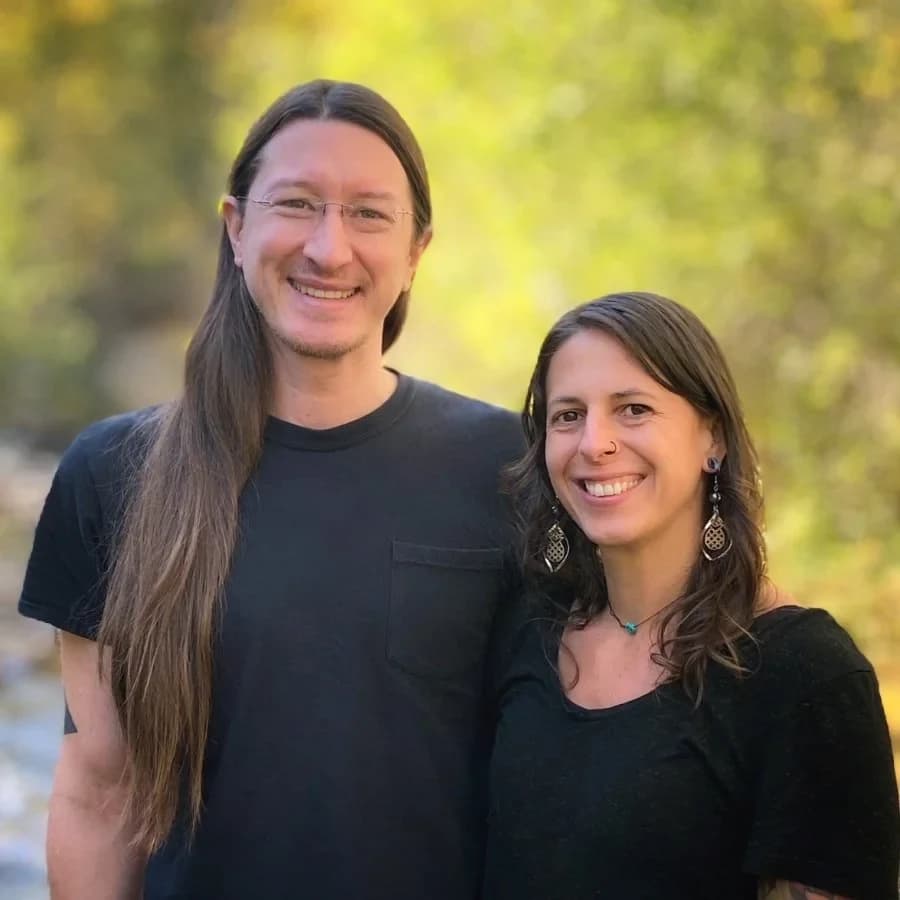
Jeremy "Jemo" Chambers is an American church planter, urban missionary, spiritual director, author, and trainer whose vocational life sits at the seam between contemplative spiritual formation and missional-movement practice. Born around 1986, he has said he began praying about a
Sustainable Mission